

lessons from studio ghibli on creativity
why "whisper of the heart" and "kiki's delivery service" are perfect films for anyone suffering creative block

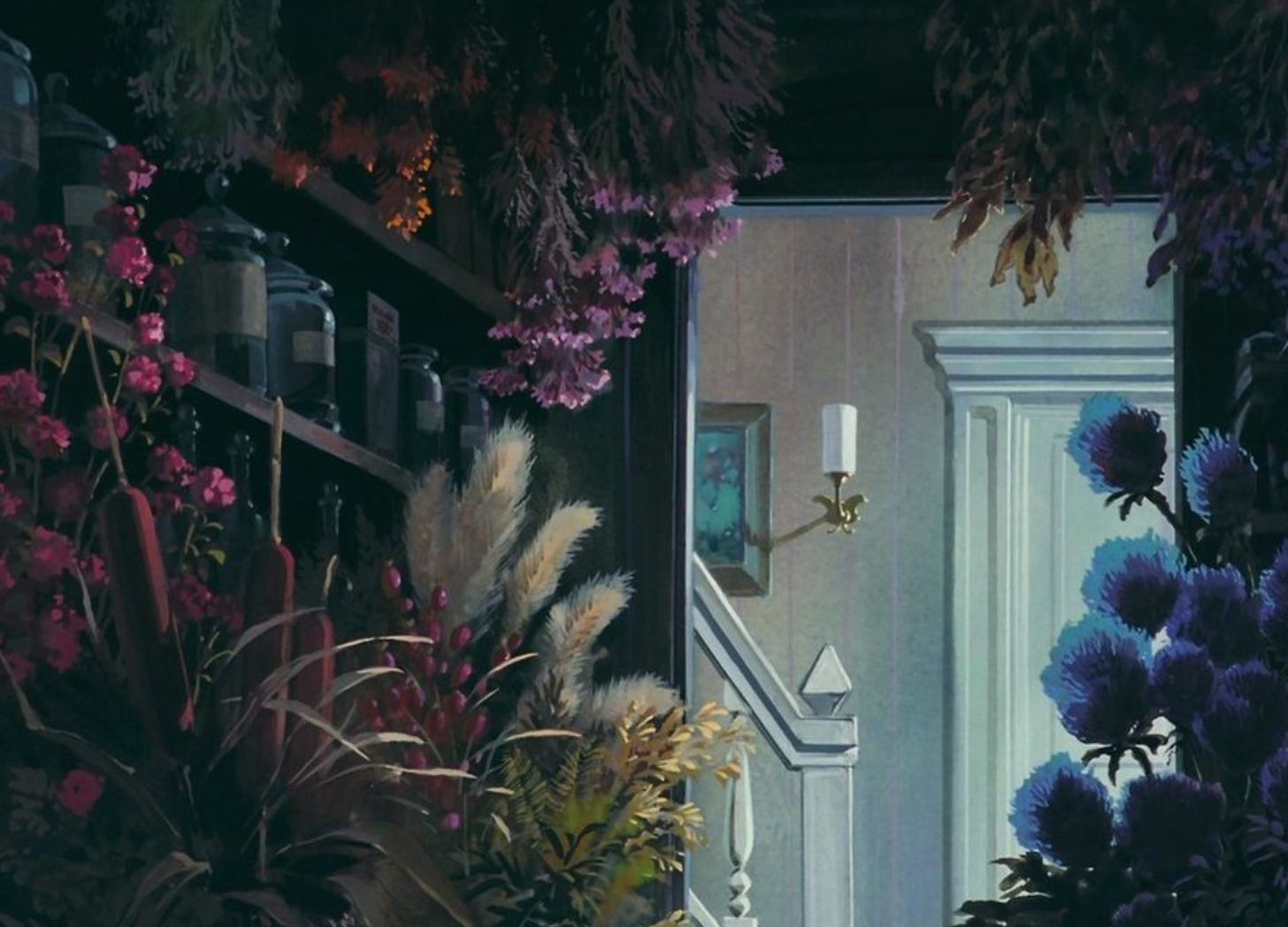
I watched my first Studio Ghibli film, Howl’s Moving Castle, when I was sixteen and in the middle of developing my first full-length novel.
I still remember how equally exhausting and exhilarating starting my novel felt—I had written in solitude before, but now I was a student in a writing trade school. Feedback from mentors and classmates joined my process of planning, plotting, and drafting—and as a formerly isolated writer, this daunted me.
Pointed-out plot holes and missing pieces of structure sparked self-doubt, which morphed into imposter syndrome. I wondered if I’d somehow tricked my mentors into thinking I knew what I was doing. “Can I even call myself a writer anymore?” was a thought played on repeat for a while.
Then, I found Howl’s Moving Castle.
Based on Diana Wynne Jones’ 1986 fantasy novel, the Studio Ghibli movie isn’t about writing or creativity, but it profoundly inspired my art in a way no other story has. Its whimsical, chaotic style reminded me of the inherent beauty of storytelling in the midst of my own challenges. It also introduced me to the rest of the Ghibli library of films that have invigorated my writing.
Here are three creative lessons that have stuck with me from the films Whisper of the Heart and Kiki’s Delivery Service—specifically lessons that have helped me during times of creative block or self-doubt!
follow threads and see where they lead
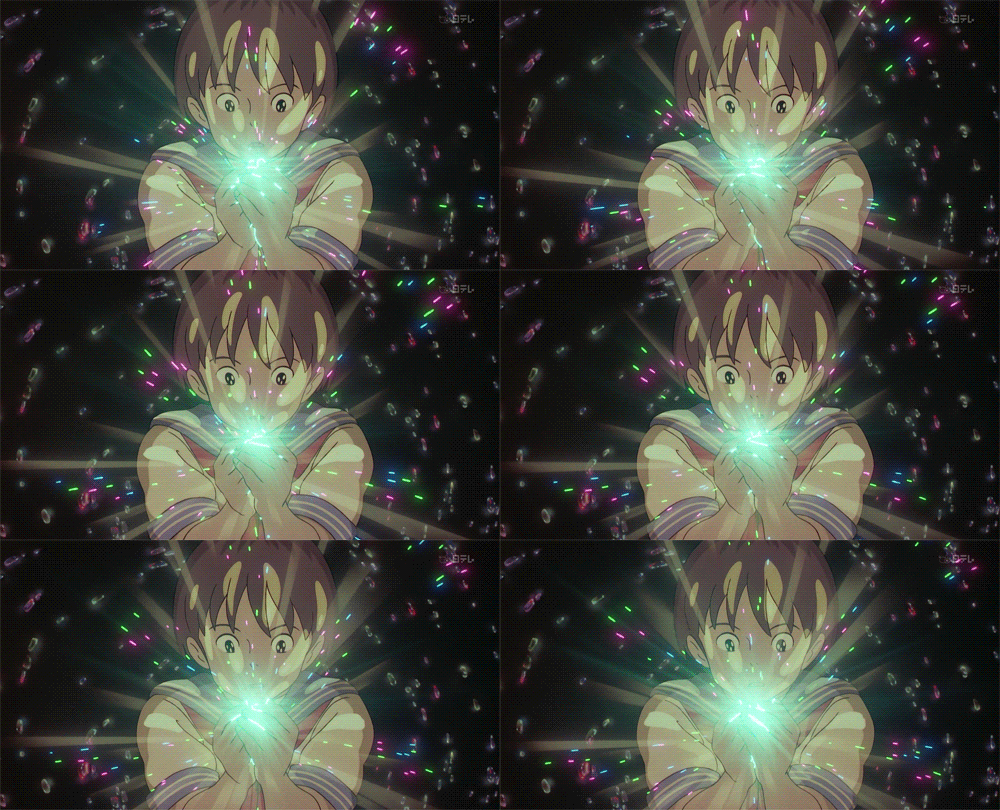
Whisper of the Heart (1995) is director Yoshifumi Kondō’s masterpiece about young Shizuku’s dream of writing books. Unlike the majority of the Studio Ghibli collection, this heartfelt coming-of-age story is mostly grounded in reality (it wouldn’t be Ghibli if it didn’t have a hint of the fantastical!), following her first love and the writing of her first novel.
I watched this one after I had completed my first novel, and I wished I could time-travel and watch it beforehand. I related so deeply to Shizuku and all of the confusing feelings that come with being young and having big dreams that you don’t quite know what to do with.
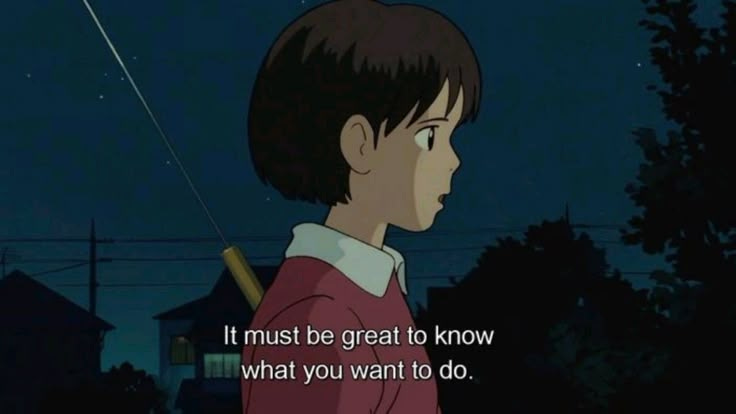
In the beginning of the film, Shizuku has ideas and longings, but she lacks discipline and direction. She realizes this later when Seiji—the love interest—begins pursuing his violinmaking in tangible ways, like moving to Italy to apprentice with a master artisan.
Shizuku follows her passion for storytelling in scattered fragments: ordinary moments, half-formed ideas, and connections and patterns. At first, everything feels uncertain—she doesn’t know where she’s going, and she constantly struggles with distraction. But as the story unfolds, these fragments fall into place until she finally begins to write with intention.
Even once she settles into her writing process, she struggles with doubts, fears, and balancing her art with her life. But what keeps her going is continuing to follow threads, no matter how thin, and watching where they lead.
All along, she was shaping a story that would eventually become beautiful.
The direction is rarely clear from the beginning, but taking your own path requires trust in your own curiosity and the patience to follow it.
heal burnout by reconnecting with your art
Kiki’s Delivery Service (1990) isn’t about a writer—it follows a young witch with a broomstick and talking cat. But Whisper of the Heart clearly echoes its charming coming-of-age tale about a girl’s everyday struggles as she steps into independence.
This film has an incredible metaphor for creative block: the loss of magic. When Kiki falls into self-criticism, she loses sight of why she runs her delivery service (her own art), and she loses the magical ability to fly. “I think something’s wrong with me,” she says, “I make friends, then suddenly I can’t bear to be with any of them. Seems like that other me, the cheerful and honest one, went away somewhere.”
I’ve struggled with burnout before, and I’ve felt just like Kiki.
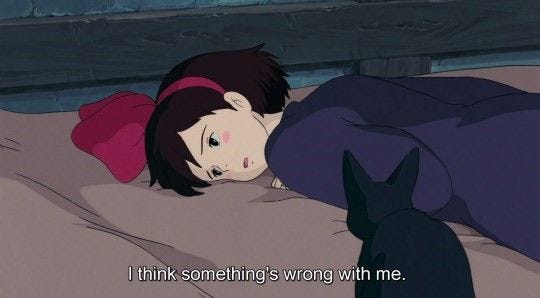
In a simple and beautiful picture of creative community, eccentric painter Ursula teaches Kiki how to get back on track through rest and focusing on herself. When Kiki strains to fly, Ursula doesn’t tell her to keep trying—she tells her to stop. “Take long walks. Look at the scenery. Doze off at noon. Don’t even think about flying. And then, pretty soon, you’ll be flying again.”
Eventually, Kiki does fly again. But it takes pausing, paying attention, trusting the unknown, and most importantly, remembering and reconnecting with her reason for the magic in the first place. Ursula calls it her spirit—what makes her feel most alive.
Whenever you start to doubt your own abilities or struggle to see the worth in your art, come back to this: reconnect with your why and where your passion began.
creativity is a geode
Back to Whisper of the Heart, a pivotal moment of the film is when an older and wiser artist (Seiji’s grandfather) encourages Shizuku’s talent by comparing it to a geode in need of polishing.
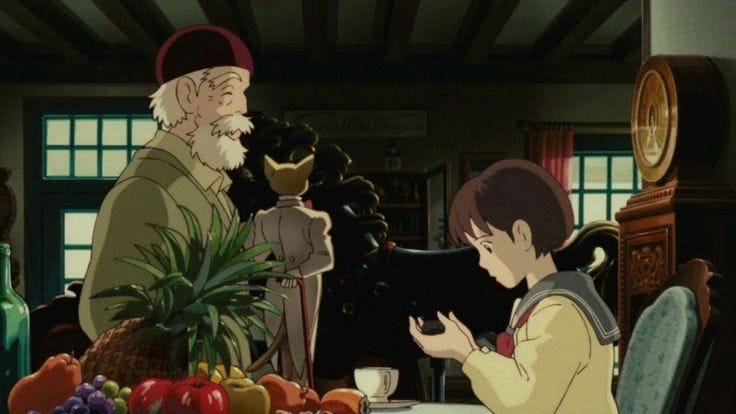
Nishi: “You and Seiji both, you’re like that stone. Unpolished stones in their natural state. Now, I like even unpolished stones very much, but things like violin making and storywriting are different. You have to find the rough gems inside yourself, take the time, and polish them. It’s very time consuming work. That rock has a largest stone, right?”
Shizuku: “Yes.”
Nishi: “Actually, that one, when you polish it, instead turns out to be
worthless. The smaller ones further inside are of higher purity. And in a
part you can’t see from the outside, there might be even better stones.
Ah, this won’t do. You get old and you start getting preachy.”
Shizuku: “I’ve become very afraid of finding out whether or not I have a beautiful crystal like this inside me. But I want to write. When I’ve
written my story, I’ll be sure to show it to you first.”
I think this interaction speaks for itself (it might be my favorite symbol for creativity or talent). Creativity holds an element of uncertainty—like Shizuku not knowing how to pursue her dream and Kiki losing sight of her magic—and doubts and distractions are part of the process. But if you stay long enough and keep following threads, something luminous will emerge from beneath the surface.
All posts on Stellify are currently free to read.
If you’d like to support my creative work, you can “buy me a coffee” here:
☕